


We designed the original. That's how we know where it's weak.
Every OEM part has a history: the compromises that made it into production, the failure modes the field discovered later. Our lead engineers were there when those parts were drawn. When we re-engineer one, we’re not copying it, we’re finishing it.
Solutions
24/7 ONLINE SUPPORT
Get Support when you need it the most
“That's just how that part is.”
Every operation has one: the part that always cracks in the same place, the bushing with a known life, the guard that never quite protects what it should. The OEM’s answer is a replacement on the same drawing, and the failure resets its clock. You don’t have to accept a part’s known weakness as permanent.
A copy shop can match a casting. Improving one takes knowing why it was designed that way in the first place, what loads it really sees, and what the rest of the machine will tolerate if you change it.
How a re-engineering project works
Start from the failure, not the drawing.
We study how and where your part actually fails: wear studies, fracture analysis, field history.
Redesign with whole-machine knowledge.
Geometry, alloy, and tolerances revised by engineers who know the design loads because they set them.
Manufacture and verify.
Built to our specifications, dimensionally verified, and backed by our 0.17% warranty rate.
Prove it in your machine.
We track the re-engineered part against the original's history, so the improvement is documented.
Not just wear parts. The biggest components in the machine.
Liners are where most operations start with us, because they’re the fastest win. But the components that prove whole-machine engineering are the big ones: the head your crusher spins and the frame everything else bolts to.

Forged heads
Forged, not cast, for the duty the OEM design never planned on. In operation and performing at [ X ] mines for [ X ] years. [ Confirm machine models and service years. ]
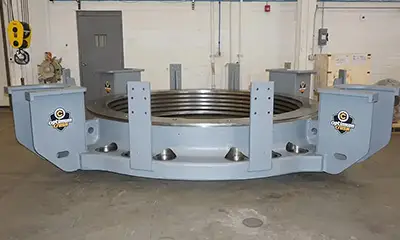
Improved main frames
Redesigned to end the cracking problems the original frames were known for. Our improved designs have solved chronic cracking at several mines and have run for many years since.
At Meadowbank, chronic main frame cracking kept coming back no matter how it was repaired. Our improved main frame design ended it: the frame has been in service for many years without a recurrence. [ Confirm machine model, install year, and figures. ]
Put a number on it first
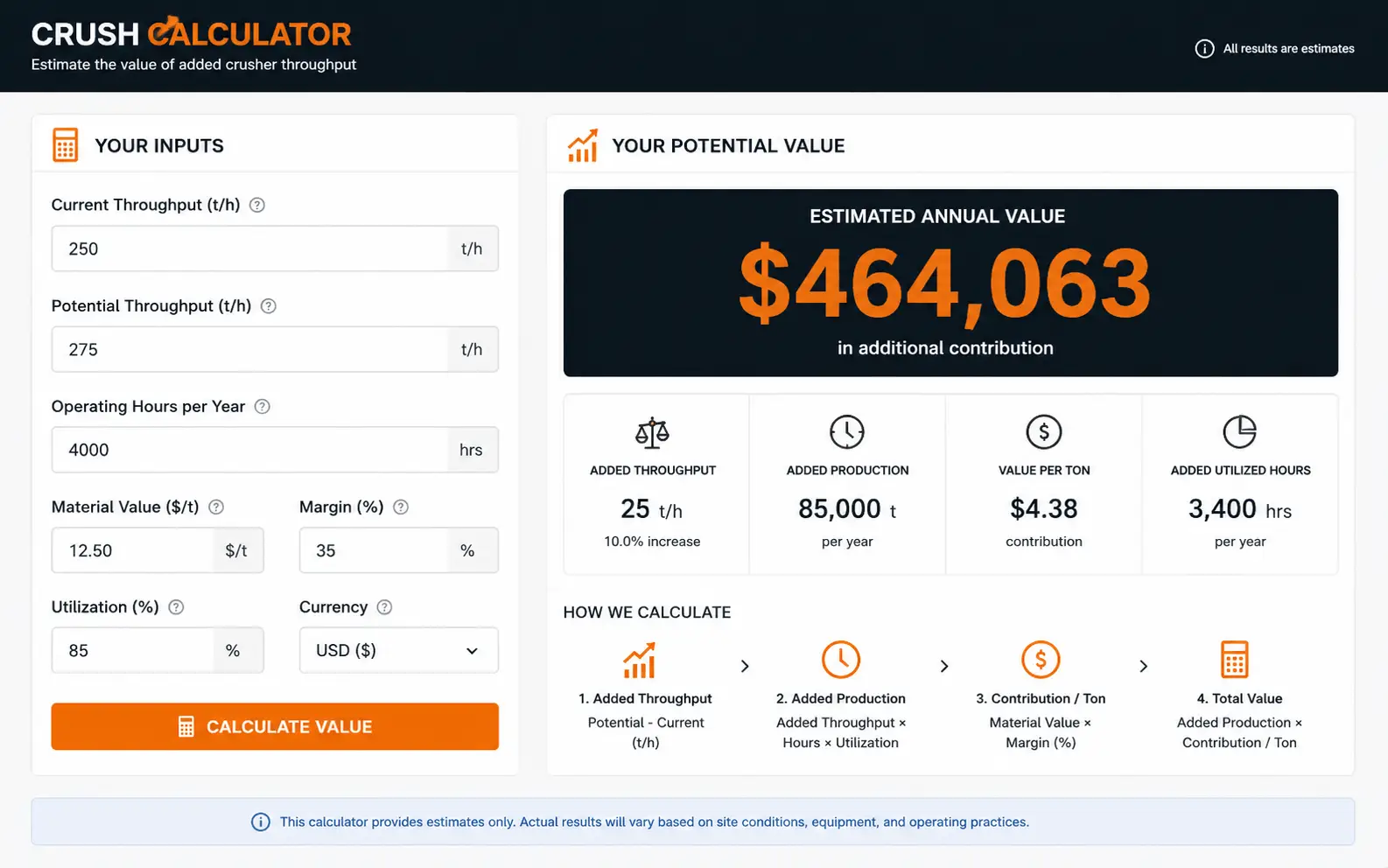
The Crush Calculator estimates what added throughput or liner life is worth at your operation. Run your numbers, then send us the result; it’s the fastest way to start a useful conversation.
0.17%
Warranty rate
(OEMs average ~3%)
100+
Years designing these
machines at the OEM
9
Machine classes designed,
200 to 2,500 HP
Where re-engineering pays off first
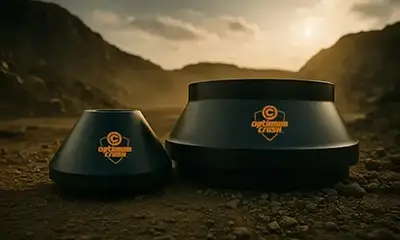
Mantles & bowl liners
Profile and alloy matched to your ore instead of the world average.
Wear & contact parts
Arm guards, feed plates, and ore contact points that outlast the originals.
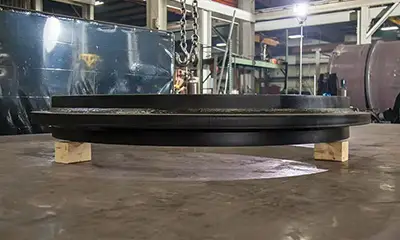
Custom engineered components
When the part you need doesn’t exist yet, we design it.
Which part are you tired of replacing?
Tell us the part and the failure. If we can make it better, we’ll show you how; and the best way to show you is at your site, next to the machine.
 English
  Spanish
  French